

Stakeholder Analysis - Identifying Your Key Information Audiences

As a Public Information Officer (PIO) in the public sector, understanding your crucial information audiences is essential for effective communication. Stakeholder analysis helps you identify, categorize, and prioritize your audiences, ensuring your messages reach the right people. Let's explore how to conduct a thorough stakeholder analysis.
Why Stakeholder Analysis Matters
Stakeholder analysis enables you to tailor your communication strategies to meet the needs of different groups. By identifying your stakeholders, you can better understand their interests and concerns and the best ways to engage with them.

Steps to Conduct Stakeholder Analysis
1. Identify Your Stakeholders
Start by listing all potential stakeholders. Think broadly and include internal and external groups.
Internal Stakeholders: Employees, department heads, and board members.
External Stakeholders: Citizens, media, local businesses, community groups, and government agencies.
2. Categorize Stakeholders
Group stakeholders based on their level of interest and influence.
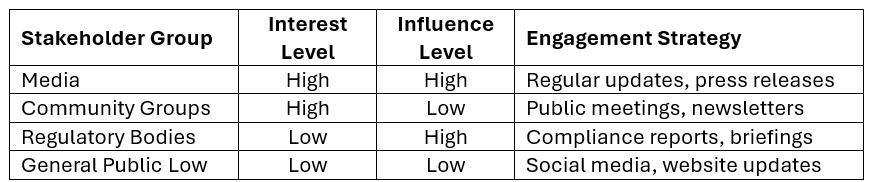
High Interest, High Influence: Key decision-makers, senior management, media.
High Interest, Low Influence: Community groups, local activists.
Low Interest, High Influence: Regulatory bodies, external experts.
Low Interest, Low Influence: General public, distant stakeholders.
3. Prioritize Your Stakeholders
Focus on the groups that are most critical to your communication goals. Use a simple table to keep track:
Developing Engagement Strategies
Tailor your engagement strategies based on the prioritization. Here are some approaches:
High Interest, High Influence: Provide detailed information and involve them in decision-making.
High Interest, Low Influence: Keep them informed and consider their feedback.
Low Interest, High Influence: Keep them updated on key developments and ensure compliance.
Low Interest, Low Influence: Provide general updates through accessible channels.
Feedback Mechanisms
Encourage Two-Way Communication: Set up systems like surveys, feedback forms, and public forums where stakeholders can express their views and concerns.
Act on Feedback: Demonstrate that you value stakeholder input by making visible changes based on their feedback.
Customized Communication Channels
Identify Preferred Channels: Find out which communication channels your stakeholders prefer (e.g., email, social media, in-person meetings).
Tailor Content: Customize your content to suit the medium and the audience's preferences.
Regular Updates and Consistency
Schedule Updates: Provide regular updates to keep stakeholders informed. Consistency helps build trust and keeps the audience engaged.
Transparency: Be open about progress, challenges, and setbacks. Transparency fosters trust and credibility.
Engagement Activities
Host Events: Organize town hall meetings, webinars, and workshops to engage with stakeholders directly.
Community Involvement: Encourage stakeholder participation in community projects and initiatives.
Education and Awareness Campaigns
Informative Content: Create educational content to inform stakeholders about important issues, policies, or changes.
Awareness Campaigns: Run campaigns to raise awareness about specific topics or initiatives.
Measuring Effectiveness
Metrics: Define metrics to evaluate the effectiveness of your engagement strategies (e.g., engagement rates, feedback scores).
Adjust Strategies: Use the insights gained from metrics to refine and improve your engagement efforts.
Collaborations and Partnerships
Build Partnerships: Collaborate with local organizations, businesses, and community leaders to strengthen your engagement efforts.
Joint Initiatives: Launch joint initiatives that benefit the community and your organization.
These points will provide a more comprehensive guide to developing effective engagement strategies. Let me know if there's anything more specific you'd like to include!
Conclusion
A well-conducted stakeholder analysis helps you identify and understand your key information audiences. By categorizing and prioritizing stakeholders, you can tailor your communication strategies to be more effective and engaging.
Stakeholder analysis is an ongoing process. Regularly review and update your analysis to stay updated on your evolving audience needs.
Doing this ensures that your communication efforts are targeted and effective, ultimately building stronger relationships with your stakeholders.